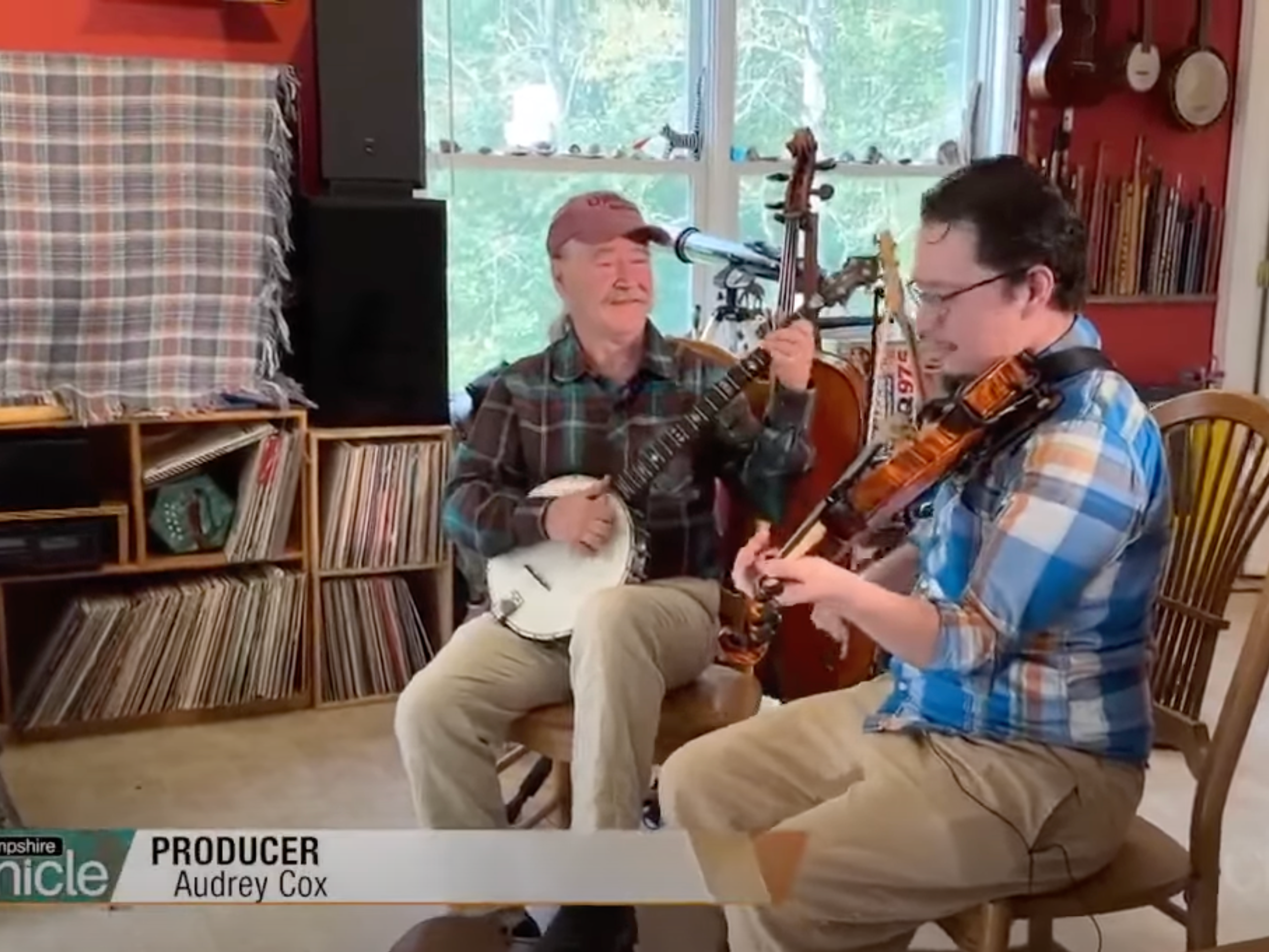
Piper Eliot Grasso and fiddler Jim Eagan play the Scolding Wife, Trim the Velvet, and the Nine Pint Coggie at the Sunday night concert for the City that Reeds: Irish Traditional Music in Baltimore, 1976-2026. Recorded in conjunction with Smithsonian Folklife. Recording and mixing by Brennish Thomson.
A staple of the Baltimore traditional music scene, Jim Eagan's deep connection to Irish music is reflected in his musical style. Jim started playing Suzuki violin at the age of five, and Irish dancing at about the same time. From age fifteen he studied fiddle with Brendan Mulvihill, and competed in the Fleadh Cheoil, the All-Ireland music competition, in 1996, where he was awarded third place in the 15-18 fiddle category.
In 1997, Jim was invited to teach at the Augusta Heritage workshops, where he went on to instruct for many years. In the late 1990s, he spent several years as a member of the John Whelan Band, touring Ireland, Europe, Canada, and the U.S. Back home in Maryland, he became a Baltimore fixture as a member of the Old Bay Ceili Band, competing in Ireland with them as well, and has been a long-standing member of O’Malley’s March. For the past two decades, Jim has also hosted and played at regular sessions throughout the city, collaborating with countless local musicians and nurturing the region’s vibrant traditional music community.
Jim’s album of Ed Reavy’s compositions, At Reavy’s House, was released in 2004, further showcasing his dedication to the tradition and its legacy.
Eliot Grasso (uilleann pipes, flute, tin whistle), has taught, performed, and recorded throughout North America and Europe for over two decades and is a founding member of the Celtic ensemble Dréos. He has performed for President Clinton at the NEA Awards, appeared as a featured artist on “Prairie Home Companion,” performed and taught for the William Kennedy Piping Festival in Armagh, and appeared as a soloist in the Glasgow Royal Concert Hall for Scotland’s National Piping Festival, Piping Live.
Eliot has over a dozen recordings to his name, including an album of unaccompanied uilleann piping, which is volume 1 of Na Píobairí Uilleann’s series of master pipers, The Ace and Deuce of Piping. Eliot holds a Ph.D. in musicology from the University of Oregon, and a M.A. in ethnomusicology from the Irish World Academy of Music and Dance at the University of Limerick. Grasso’s artistic and academic work as a performer, recording artist, composer, and researcher has earned awards from the traditional music community, the recording industry, and the academic establishment. He teaches music at Gutenberg College in Eugene, Oregon.
Accordion player Sean McComiskey and his student Claire Noonan play Hole in the Hedge and Hand Me Down the Tackle on their Savoy melodeons at the Sunday night concert for the City that Reeds: Irish Traditional Music in Baltimore, 1976-2026. Recorded in conjunction with Smithsonian Folklife. Recording and mixing by Brennish Thomson.
Sean McComiskey is among the most innovative young performers on the button accordion, with a unique harmonic style that has earned him a spot in the pantheon of Irish accordionists far beyond his native Baltimore. As the son of legendary button accordion player and National Heritage Fellow Billy McComiskey, Sean has been surrounded by Irish Traditional music his entire life and has developed a deep appreciation for the tradition of which he is a part. This has helped Sean establish a reputation as a highly regarded teacher and promulgator of Irish music and earned him teaching positions with the Catskills Irish Arts Week, the Augusta Heritage Center’s Irish Arts Week, the Chris Langan Traditional Irish Music Weekend in Toronto, the CCE Musical Arts and Dance (MAD) Week in Washington, DC, the Baltimore Irish Trad Fest, and the Spanish Peaks International Celtic Music Festival.
In addition to being a highly regarded teacher, Sean has performed throughout the United States, Canada, and Europe. He was recently honored as a silver medalist in the Senior All-Ireland Melodeon competition. He’s recorded albums and toured with groups including NicGaviskey and the Old Bay Ceili Band. In 2014, Sean formed the Baltimore-based acoustic roots group, Charm City Junction, with Patrick McAvinue on bluegrass fiddle, Brad Kolodner on Appalachian old-time clawhammer banjo, and Alex Lacquement on upright bass. In 2015, they released their self-titled debut album and in 2016 were nominated for the International Bluegrass Music Association’s Band Momentum Award. This collaboration has enabled Sean to bring his unique style of Irish button accordion to the old-time and bluegrass music communities as a featured performed at venues including the Grand Ole Opry, the Kennedy Center, the Grey Fox Bluegrass Festival, the National Folk Festival, and numerous other folk and acoustic music festivals, concerts, and performing arts centers around the country. They released their third studio album, “Salt Box,” in 2024 which hit number one on the Billboard Bluegrass Charts the week of its release.
When Sean isn’t playing the button accordion, he is the owner and clinic director of a private practice physical therapy office in Baltimore City called Birch Tree Physical Therapy and Wellness. In his work as a PT, one of his areas of special interest is the treatment and rehabilitation of injured musicians and artists suffering from repetitive stress injuries.
Baltimore native Eliot Grasso plays a slip jig and two jigs during his interview for the City that Reeds: Irish Traditional Music in Baltimore, 1976-2026. Recorded in conjunction with Smithsonian Folklife. Recording and mixing by Brennish Thomson.
Eliot Grasso (uilleann pipes, flute, tin whistle), has taught, performed, and recorded throughout North America and Europe for over two decades and is a founding member of the Celtic ensemble Dréos. He has performed for President Clinton at the NEA Awards, appeared as a featured artist on “Prairie Home Companion,” performed and taught for the William Kennedy Piping Festival in Armagh, and appeared as a soloist in the Glasgow Royal Concert Hall for Scotland’s National Piping Festival, Piping Live.
Eliot has over a dozen recordings to his name, including an album of unaccompanied uilleann piping, which is volume 1 of Na Píobairí Uilleann’s series of master pipers, The Ace and Deuce of Piping. Eliot holds a Ph.D. in musicology from the University of Oregon, and a M.A. in ethnomusicology from the Irish World Academy of Music and Dance at the University of Limerick. Grasso’s artistic and academic work as a performer, recording artist, composer, and researcher has earned awards from the traditional music community, the recording industry, and the academic establishment. He teaches music at Gutenberg College in Eugene, Oregon.
Traditional singer Catherine O'Kelly singing a sean nós song during her interview for the City that Reeds: Irish Traditional Music in Baltimore, 1976-2026. Recorded in conjunction with Smithsonian Folklife. Recording and mixing by Brennish Thomson.
Catherine O’Kelly is an award-winning Irish traditional singer and fiddle player from Tappan, NY, currently based in Baltimore, MD, where she is completing her master’s degree in Speech-Language-Hearing Sciences at Loyola University Maryland. Influenced by her grandparents from County Roscommon, she was immersed in New York’s traditional music scene from a young age and often sings unaccompanied in the sean nós style, using ornamentation and emotion to tell centuries-old stories. In 2019, she placed 3rd at the All-Ireland Fleadh Cheoil na hÉireann in Under 18 Ladies English Singing.
Catherine has performed, taught, and competed up and down the East Coast, appearing at events such as the Blarney Star Music Series at the New York Irish Center, the Baltimore Irish Festival, and Celtic Fest Mississippi. In October 2024, she was featured on the East Coasters’ self-titled debut album and performed and taught workshops with the band; she has also appeared on Joanna Clare’s To Keep the Candle Burning. In addition to performing, Catherine teaches privately and has served on staff at the Baltimore Irish Trad Fest. She is passionate about passing down the haunting and spiritual songs of the Irish tradition to future generations and helping others connect with the music of their ancestors.
Master pianist Donna Long playing a piece by Turlough O'Carolan during her interview for the City that Reeds: Irish Traditional Music in Baltimore, 1976-2026. Recorded in conjunction with Smithsonian Folklife. Recording and mixing by Brennish Thomson.
Donna Long is regarded as one of the leading pianists in Irish traditional music. Her distinct accompaniment style and solo interpretations of O’Carolan’s music have shaped Irish piano for over four decades. At age four she began lessons with her father, jazz and classical pianist Byron Long. She was first exposed to Irish traditional music after moving from Los Angeles to Baltimore, Maryland in 1980. Inspired by Baltimore's vibrant community, she began learning traditional music from fiddler Brendan Mulvihill. The duo recorded two acclaimed albums, The Steeplechase and The Morning Dew.
In 1996, she joined Cherish the Ladies, touring internationally for ten years. Her solo CD Handprints (2003) earned her critical acclaim and featured her composition Luna. In 2000, the Smithsonian invited her to represent Irish music in its Piano Traditions series, and the Library of Congress commissioned an original composition in 2001. She has played many tours with the National Council for the Traditional Arts, accompanying artists such as James Kelly, Brendan Mulvihill, Jerry Holland, and Liz Carroll. A dedicated teacher of piano and fiddle, Donna passed music on to her son, Jesse Smith, and In 2008, Donna was awarded the MD Arts Council Teacher/Apprentice Grant, which honored her piano student Matt Mulqueen; and again in 2019, which honored her fiddle student Mikela Murphy. Donna continues to perform, compose, and pass her artistry to new generations.
Flutist Laura Byrne playing a slow air during her interview for the City that Reeds: Irish Traditional Music in Baltimore, 1976-2026. Recorded in conjunction with Smithsonian Folklife. Recording and mixing by Brennish Thomson.
Laura Byrne moved to Baltimore from Vermont in 1989 to attend the Peabody Conservatory of Music. After earning degrees in flute performance and music education, she devoted her career to Irish traditional music. Her playing is rooted in the older generations of musicians, shaped by time in Ireland and learning from musicians in the U.S. Her mentors and influences include Billy McComiskey, Catherine McEvoy, Matt Molloy, and Mike Rafferty.
Laura has performed and taught at festivals and major venues throughout North America and Ireland, including The Kennedy Center, the Smithsonian Folklife Festival, National Cathedral, Birchmere, Catskills Irish Arts Week, MAD Week, and Goucher College. A central figure in Maryland’s Irish music community, she is a multiple MSAC award recipient and Founder and Artistic Director of the Baltimore Irish Trad Fest.
Her recordings include solo albums Tune for the Road (2005) and Lucky Day (2010); Crabs in the Skillet with The Old Bay Ceili Band (2011); and Forget Me Not (2014), a much-loved duo album with NY Sligo-style fiddler Rose Flanagan. Her newest project is a landmark recording with Tidewater, with Billy McComiskey, Donna Long, Joanna Clare, Eileen Estes, David McKindley-Ward, among others, documenting Irish traditional music in the Mid-Atlantic
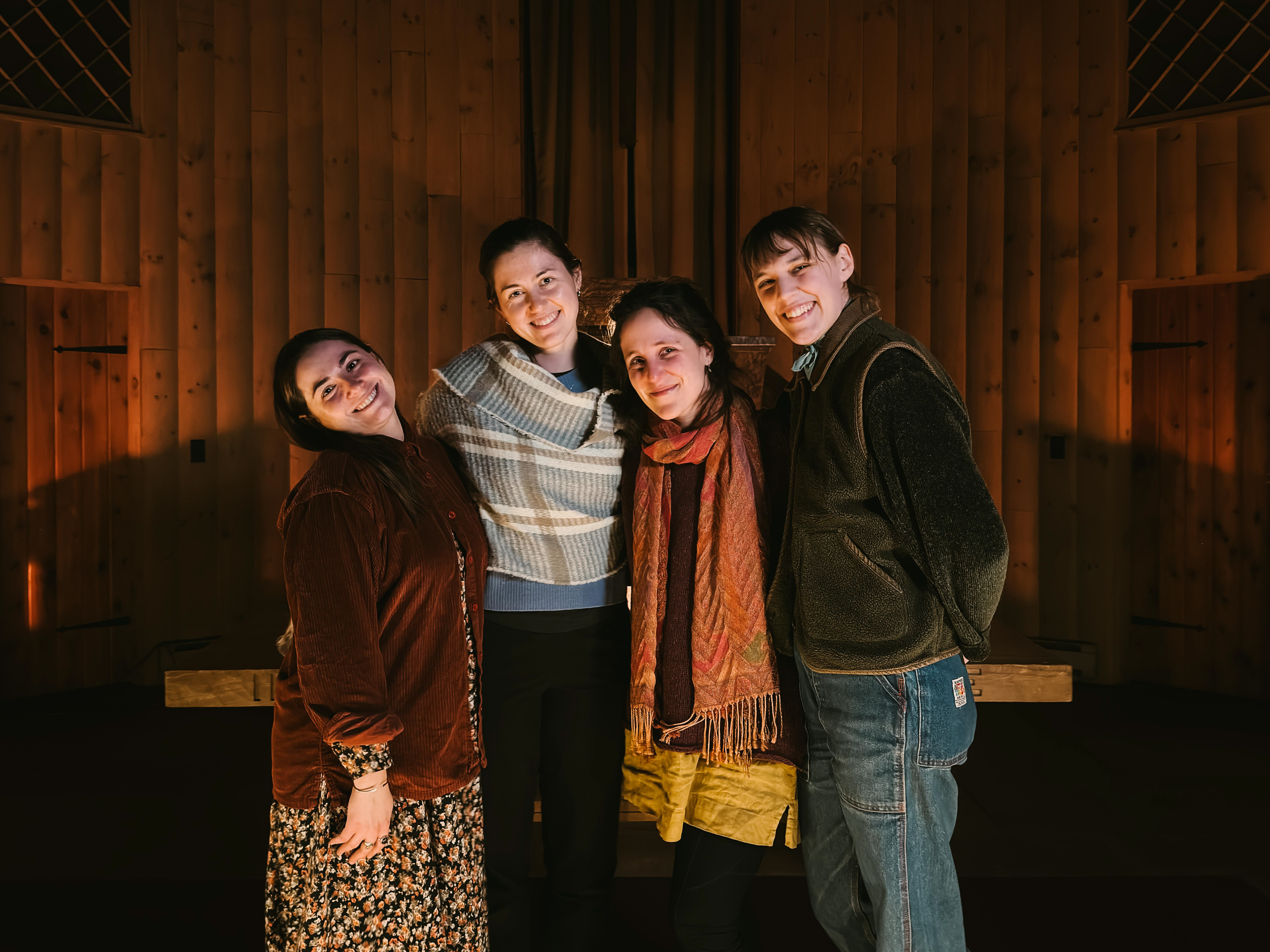
Below are behind the scenes images from our week of recording around Baltimore.